 Claude
 Perplexity
TL;DR
- For Dubai homeowners, tenants, villa owners, and property managers dealing with coffee spills on carpets and rugs, covering exactly how to remove a coffee stain from carpet whether it happened five minutes ago or five weeks ago.
- Coffee stains are stubborn because of tannins, oils, and (with milk-based coffee like karak) proteins that bond with carpet fibres.
- A simple vinegar and dish soap solution, applied with the right blotting technique, removes most fresh and set-in stains without damaging fibres.
- Dubai's climate adds its own complications: AC-dried indoor air, coastal humidity swings, and desert dust all affect how a stain behaves and how well it lifts.
- For wool or Persian rugs, set-in stains across large areas, or stains that keep reappearing, professional carpet cleaning is the safer route.
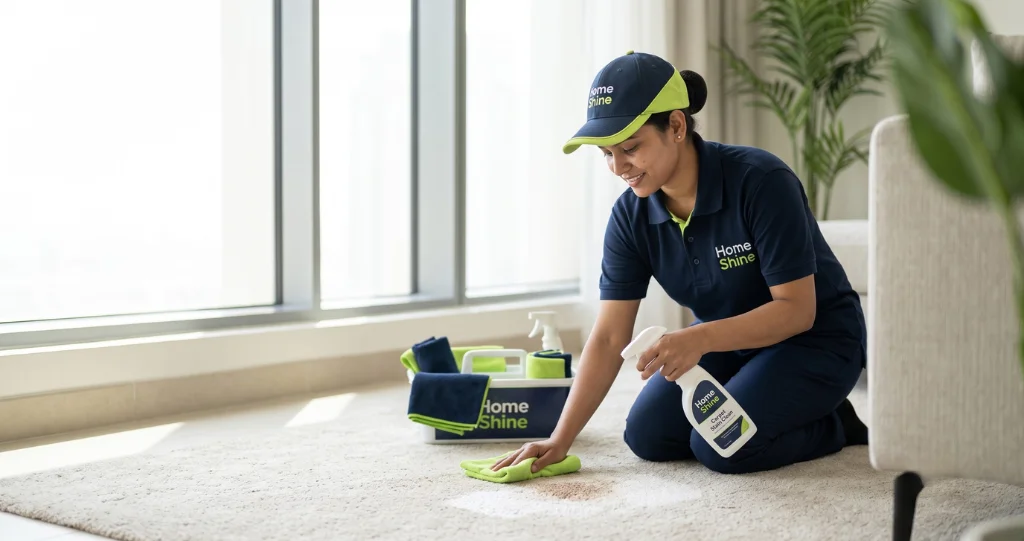
Coffee spills happen in almost every Dubai home, whether it is a rushed morning cup before work in Business Bay or a round of karak served during a majlis gathering in a Jumeirah villa. Knowing how to remove a coffee stain from carpet quickly and correctly can be the difference between a stain that disappears completely and one that leaves a permanent mark.
This guide walks through the exact steps to clean coffee stains from carpet, whether the spill just happened or has already dried in. It also covers what makes Dubai homes a little different when it comes to stain removal, from AC-dried air to wool rugs found in many villas, so you can treat stains in a way that actually works for your home.
Also read
Why coffee stains are difficult to remove from carpet
Coffee is more than a brown liquid. It contains tannins, the same tannins found in tea and red wine, and they bond rapidly with carpet fibres, much like a dye, so a five-minute-old spill is always easier to treat than one from last week.
Coffee also contains natural oils that may leave a slight oily film even after a stain appears to have been removed. If the coffee was prepared with milk or cream, the proteins in dairy will combine with the tannins to create a more complex stain. That is one reason why a plain water rinse is seldom sufficient on its own.
The type of carpet also influences how easily the stain lifts. Man-made fibres such as nylon and polyester, commonly found in Dubai apartment carpets, resist staining reasonably well and respond to home treatments. Higher-end carpets, including many Persian and wool rugs found in Dubai villas, absorb liquid more deeply and require gentler cleaning to prevent discolouration.
Immediate steps: treating a fresh coffee spill
When coffee is fresh, acting quickly is the most important step. The goal is to remove as much liquid as possible before it can set into the fibres.
Blot, do not rub. Rubbing pushes the coffee deeper into the carpet fibres and spreads the stain outward. Use a clean, white cloth or paper towel and apply pressure from the outer edges toward the centre of the stain.
Once some liquid has been absorbed, apply a small amount of cold water directly to the stain to dilute the remaining coffee, then continue blotting with a clean, dry cloth until the stain begins to fade. Repeat using a dry part of the cloth until only a light trace remains.
Avoid soaking the area. Pouring water directly onto the stain can seep into the carpet backing or wet the padding for days, particularly in warm or humid weather. Small amounts of water applied several times works better than saturating the carpet all at once.
How to remove coffee stains from carpet using household solutions
If cold water alone does not fully lift the stain, a simple homemade solution is usually the next step. A few tried and tested options work well for most carpet types.
Vinegar and dish soap solution
Mix one tablespoon of white vinegar and one tablespoon of liquid dish soap into two cups of warm water. The vinegar breaks down the colour-causing tannins in the stain, while the dish soap cuts through any oily film that coffee leaves behind.
Dip a clean cloth into the solution and blot the stain, starting from the outer edge toward the centre. Allow the solution to sit on the stain for a few minutes, then blot dry. Repeat if necessary, and finish by dabbing with plain cold water to rinse out any soap residue. Soap left in the carpet fibres attracts dirt over time and can cause the area to look dingy within weeks.
Baking soda paste
Baking soda works well on stains that have partially dried or are proving stubborn. Mix three parts baking soda with one part water to form a thick, spreadable paste, then apply it directly onto the stain with a spoon or clean cloth.
Allow the paste to dry completely, which can take a few hours depending on the size of the stain. Once dry, vacuum the residue thoroughly. Baking soda absorbs coffee particles as it dries, lifting a good portion of the stain along with it.
Hydrogen peroxide for light-coloured carpets
For light or white carpets, a diluted hydrogen peroxide solution can help with particularly stubborn marks, since it has mild bleaching properties. This method should only be used on light-coloured carpets and always tested on a hidden patch first, as it can lighten dyed or darker fibres if applied carelessly.
Apply a small amount with a cloth, let it sit for a few minutes, then blot and rinse with cold water. If there is any doubt about how a carpet's dye will react, it is safer to skip this step and move to professional treatment instead.
How to clean old or dried coffee stains from carpet
The key to removing old coffee stains from carpet is to rehydrate the stain before treating it. Although the liquid has long since evaporated, the coffee residue and tannins remain trapped within the carpet fibres.
Use warm water and a clean cloth or sponge to soften the dried stain, and allow it to sit for several minutes. This loosens the dried coffee residue and makes it easier to lift. Blot dry using a white cloth, working from the outer edges toward the centre, then treat with the vinegar and dish soap solution described above.
Old stains often require two or three applications rather than one. Patience matters here. Scrubbing aggressively to speed up the process is likely to cause abrasion damage to the carpet pile that the set-in coffee marks themselves would not.
Special considerations for Dubai homes
Dubai's climate and lifestyle introduce some local factors that most standard cleaning guides do not address, and these can change how you approach a coffee stain.
Karak and milk-based coffees. Karak chai and milk coffees are extremely popular across the UAE and are frequently served during majlis sessions and family visits. These drinks contain both tannins and milk proteins, so a plain vinegar solution is sometimes not sufficient. A mild enzyme-based cleaner used as a pre-treatment before the vinegar and soap step can break down the protein component more effectively, particularly on set-in stains.
Wool and Persian rugs. These are common in Dubai villas and majlis seating areas, and they require a more delicate approach than the synthetic wall-to-wall carpet found in most flats. Wool absorbs liquid more rapidly, so avoid alkaline cleaners and always test any solution on an inconspicuous corner first. If a rug is valuable or antique, professional cleaning is the safer option.
Air conditioning and drying time. AC runs almost constantly in most Dubai apartments and dries treated areas quickly, but this can leave slight soap residue if the area was over-wetted. Homes in coastal areas such as Dubai Marina, JBR, or Palm Jumeirah may take longer to dry during humid months, so directing a fan at the treated area and avoiding foot traffic until it is fully dry helps prevent musty odours or mould growth if the carpet takes too long to dry.
Desert dust. Fine sand particles can accumulate in carpet piles and mix with a coffee spill, making the stain feel gritty or harder to lift. If the surrounding carpet area contains fine sand or dust, vacuum it before treating the stain. This prevents abrasive particles from being pushed deeper into the carpet pile during cleaning.
DIY vs. professional cleaning: when to call in the experts
Most fresh coffee stains, and many older ones, can be handled at home using the steps above. There are situations, however, where repeated DIY attempts are less effective and potentially damaging.
When a stain keeps reappearing after it appears to have been cleaned, residue remaining in the carpet backing or padding is usually responsible, and this cannot be removed with ordinary household cleaning methods. A persistent odour after cleaning points to the same problem, or to moisture that was not fully extracted and dried.
Any stain beyond a very fresh, light spill on wool, silk, or Persian rugs is better left to professionals, since colour bleeding caused by the wrong solution at home can be difficult or impossible to reverse. For carpets that have not been deep cleaned in years, large stained areas, or stains that have been sitting for weeks, professional carpet cleaning in Dubai with hot water extraction reaches deeper into the pile than any spray bottle and cloth can manage. You can also read our guide on how to clean carpet at home for lighter day-to-day maintenance between professional cleans.
Professional cleaners also use specialised extraction equipment that is important in Dubai's climate, as moisture trapped in carpet padding can cause mould to grow if not fully removed. Repeatedly treating the same spot with different DIY solutions is generally not effective and may damage the carpet fibres over time.
Common mistakes that make coffee stains worse
- Using hot water. Hot water can help tannins bond more firmly to carpet fibres, particularly if the stain has already begun to dry, making it much harder to remove. Always use cold or lukewarm water.
- Scrubbing instead of blotting. Scrubbing tears at fibres and drives the stain deeper into the carpet pile. Blotting is slower but significantly more effective.
- Over-wetting the area. Using too much water or cleaning solution can push the stain into the carpet backing, causing it to reappear at the surface as the carpet dries. This is known as wicking. Light applications spread out over time work better than one large application.
- Not rinsing out soap or vinegar. Residue left in the fibres attracts dirt over time, causing the treated area to look dingy within weeks even if the original stain is gone.
Preventing future coffee stains on carpet
In a home where coffee, karak, and tea are daily necessities, a little prevention goes a long way. Coasters and trays near seating areas, particularly in the majlis or living room where cups are frequently handed around, reduce the risk of a toppling cup in the first place.
A stain-resistant carpet protector applied after professional cleaning creates a barrier so that spills have more time to be blotted up before they seep into the carpet. This is particularly useful in family homes or rental properties where maintaining carpet condition matters for landlords and property managers.
Keeping a small spot-cleaning kit at home, a bottle of white vinegar, a few white cloths, and mild dish soap, means a spill can be treated before it has a chance to set.
Treating coffee stains in a Dubai home: what to remember
Coffee stains are common, but they do not have to become permanent if treated correctly. Most fresh stains, and many old ones, can be removed without special equipment by acting quickly, blotting rather than rubbing, and cleaning with a simple solution of vinegar and dish soap. Dubai's dust, climate, and the popularity of milk-based coffees such as karak add extra considerations for villas and majlis spaces featuring wool or Persian rugs.
When stains reappear, large areas are affected, or the carpet is a delicate or valuable type, professional carpet cleaning is a safer and more effective option. HomeShine's technicians use professional extraction equipment and eco-friendly solutions to remove coffee, karak, and other stains without harming carpet fibres, with same-day availability across Dubai.
Book same-day carpet cleaning in Dubai
HomeShine removes coffee, karak, and set-in stains from all carpet types using professional extraction equipment and eco-friendly products. Same-day availability across Dubai.
Book nowFrequently Asked Questions
What is the fastest way to remove a coffee stain from carpet?
Blot the spill immediately with a clean cloth, apply cold water, and blot again. Acting within the first few minutes gives the best chance of removing the stain completely without needing any additional products.
Does vinegar actually remove coffee stains from carpet?
Yes. White vinegar helps break down the tannins that give coffee its colour, which is why a vinegar and dish soap solution is one of the most effective home remedies for coffee stains on carpet.
Can I use hot water to clean a coffee stain?
No. Hot water can set tannins into carpet fibres, making the stain harder to remove rather than easier. Always use cold or lukewarm water.
How do I remove an old, dried coffee stain from carpet?
Rehydrate the stain first with warm water to loosen the dried coffee, blot with a clean cloth, then apply a vinegar and dish soap solution. Old stains often need two or three treatment rounds rather than one.
Is it safe to clean coffee stains on a wool or Persian rug myself?
Light, fresh stains can often be blotted with cold water safely, but wool and Persian rugs absorb liquid deeply and can discolour with the wrong solution. For anything beyond a very fresh spill, professional cleaning is the safer choice.
When should I call a professional instead of treating stains myself?
If the stain keeps reappearing, an odour lingers after cleaning, the carpet is wool or a valuable rug, or the stain covers a large area, professional carpet cleaning with proper extraction equipment will get better and safer results than repeated DIY attempts.